


All Products
-
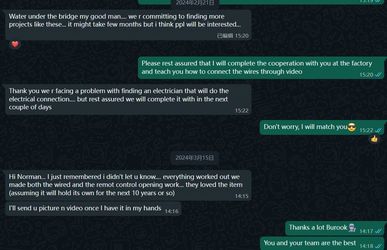 BurookHi Norman... I just remembered i didn't let u know.... everything worked out we made both the wired and the remot control opening work... they loved the item (assuming it will hold its own for the next 10 years or so)
 -
 KiranYes I don’t doubt you. Jutai is one of the most confident companies I came across in China
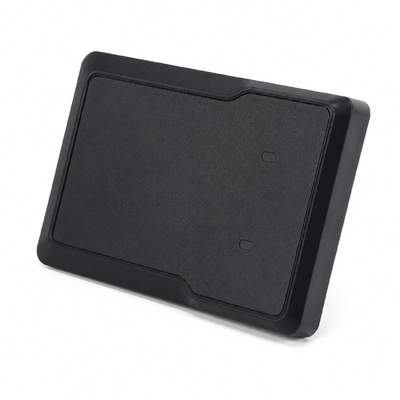
RD79-6M 79GHz Barrier Gate Radar Sensor with Anti-Crush and Trigger Detection for IP66 Outdoor Parking Barriers


| Place of Origin | China |
|---|---|
| Brand Name | JUTAI |
| Certification | CE |
| Model Number | RD79-6M |
| Document | RD79-6M.pdf |
| Minimum Order Quantity | 1 |
| Price | negotiation |
| Packaging Details | carton |
| Delivery Time | 5-8 work days |
| Payment Terms | L/C,D/A,D/P,T/T,Western Union |
| Supply Ability | 1000 pcs/m |
Product Details
| Product Type | Barrier Gate Radar Sensor | Radar Technology | 79GHz Millimeter Wave Radar |
|---|---|---|---|
| Operating Frequency | 79–81GHz | Radar Mode | Anti-Crush / Trigger / Inclined Mount Trigger |
| Distance Resolution | 4cm | Antenna Configuration | 2T4R Antenna |
| Detection Target | Vehicle Only / Pedestrian And Vehicle Detection | Barrier Arm Type | Straight Arm / Folding Arm / Fence Arm / Advertising Barrier |
| Communication Method | Communication Method | App Configuration | GL Control |
| Response Time | ≤100ms | Supply Voltage | DC12–24V |
| Average Current | 200mA@12V | Maximum Current | 600mA |
| Average Power | 1.2W@12V | Operating Temperature | -40℃ To +80℃ |
| Protection Rating | IP66 | Product Size | 73.5 × 110.9 × 32.8mm |
| Wiring Output | Power, GND, RS485, COM, NO | Main Function | Barrier Anti-Crush Protection And Opening Trigger |
Product Description
RD79-6M Smart Parking Barrier Radar Detector
Product Overview
RD79-6M is a 79GHz millimeter wave radar sensor designed for parking barrier gates, entrance and exit management, parking lots, underground garages and vehicle access control systems. It provides both anti-crush protection and trigger detection, helping barrier gates detect vehicles or pedestrians within the barrier arm zone and control lifting or lowering actions safely.

Compared with traditional loop detectors or infrared sensors, RD79-6M uses 79GHz LFM-CW radar technology with a 2T4R antenna structure. It provides high distance resolution, accurate target detection and stable operation in outdoor or complex parking environments. The radar helps reduce false triggering and improves barrier gate safety, especially in locations with frequent vehicle flow and limited installation space.
Key Features
- One Device for Anti-Crush and Trigger Detection - Integrates both functions into a single radar sensor
- 79GHz High Precision Radar Technology - 79-81GHz operation with 4cm distance resolution
- Supports Human-Vehicle Separation - Vehicle-only or pedestrian plus vehicle detection modes
- Multiple Barrier Arm Compatibility - Straight arm, folding arm, fence arm and advertising barrier gate applications
- Bluetooth App Debugging - Configuration through GL Control app with Bluetooth connection
- Adjustable Detection Range - Customizable left/right distance and detection parameters
- RS485 Communication and Relay Output - Compatible with barrier gate controllers and access control systems
- IP66 Outdoor Protection - PC and aluminum alloy housing, -40℃ to +80℃ operating temperature
Technical Specifications
| Item | Specification |
|---|---|
| Model | RD79-6M |
| Product Type | Barrier Gate Radar Sensor |
| Operating Frequency | 79-81GHz |
| Radar Technology | LFM-CW Millimeter Wave Radar |
| Antenna | 2T4R |
| Distance Resolution | 4cm |
| Detection Target | Vehicle Only / Pedestrian and Vehicle Detection |
| Barrier Gate Type | Straight Arm / Folding Arm / Fence Arm / Advertising Barrier |
| Communication | Bluetooth / RS485 |
| Response Time | ≤100ms |
| Supply Voltage | DC12-24V |
| Average Current | 200mA@12V |
| Maximum Operating Current | 600mA |
| Average Power | 1.2W@12V |
| Housing Material | PC + Aluminum Alloy |
| Product Size | 73.5 * 110.9 * 32.8mm |
| Protection Rating | IP66 |
| Operating Temperature | -40℃ to +80℃ |
Wiring Definition
| Wire Color | Function |
|---|---|
| Red | +12-24V DC |
| Black | GND |
| Green | RS485 B- |
| Yellow | RS485 A+ |
| Blue | COM |
| White | NO |
| Brown | Reserved |
| Orange | Reserved |
Applications
- Parking barrier gates
- Parking lot entrances and exits
- Underground garage access control
- Residential community parking gates
- Commercial building parking systems
- Vehicle entrance management
- Straight arm barrier gates
- Folding arm barrier gates
- Fence barrier gates
- Advertising barrier gates
- Barrier gate anti-crush protection
- Vehicle trigger detection
Installation Notes
The radar is installed on the barrier gate cabinet side. According to the installation reference in the manual, the opening hole is Φ17mm, the horizontal distance from the barrier cabinet is about 23-33cm, and the fixed hole distance from the ground varies according to barrier size.
Recommended Installation Points:
- Install the radar on the barrier gate cabinet side facing the barrier arm area
- Keep the radar detection area aligned with the barrier arm protection zone
- Set the correct barrier arm type and direction in the app
- Perform background learning after installation and parameter adjustment
- Keep people and vehicles away from the detection zone during background learning
- Save configuration after completing all parameter settings
Frequently Asked Questions
What is RD79-6M mainly used for?
RD79-6M is mainly used for parking barrier gates to provide anti-crush protection and trigger detection for vehicles and pedestrians.
What frequency does RD79-6M use?
RD79-6M operates at 79-81GHz millimeter wave radar frequency.
Can RD79-6M replace a traditional loop detector?
In many barrier gate applications, RD79-6M can be used as a radar-based trigger or anti-crush detection solution, especially where ground loop installation is difficult.
Does it support pedestrian detection?
Yes. The radar supports vehicle-only detection and pedestrian plus vehicle detection modes.
What barrier arm types are supported?
It supports straight arm, folding arm, fence arm and advertising barrier gate applications.
How is the radar configured?
The radar can be configured through the GL Control app by Bluetooth connection. Installers can set device mode, barrier type, arm direction, detection target and detection range.
What communication methods are supported?
RD79-6M supports Bluetooth and RS485 communication.
What is the working voltage?
The working voltage is DC12-24V.
Is it suitable for outdoor use?
Yes. RD79-6M has an IP66 protection rating and works from -40℃ to +80℃.
Does it support background learning?
Yes. After installation and parameter setting, background learning helps the radar adapt to the site environment and improve detection stability.
Additional Product Views
Recommended Products